

Stainless Steel 316L
線上 3D 列印服務
在 80 多種金屬和塑料材料中獲取零件的即時線上報價。美國訂單免運費。通過 ISO 9001:2015、ISO 13485 和 AS9100D 認證。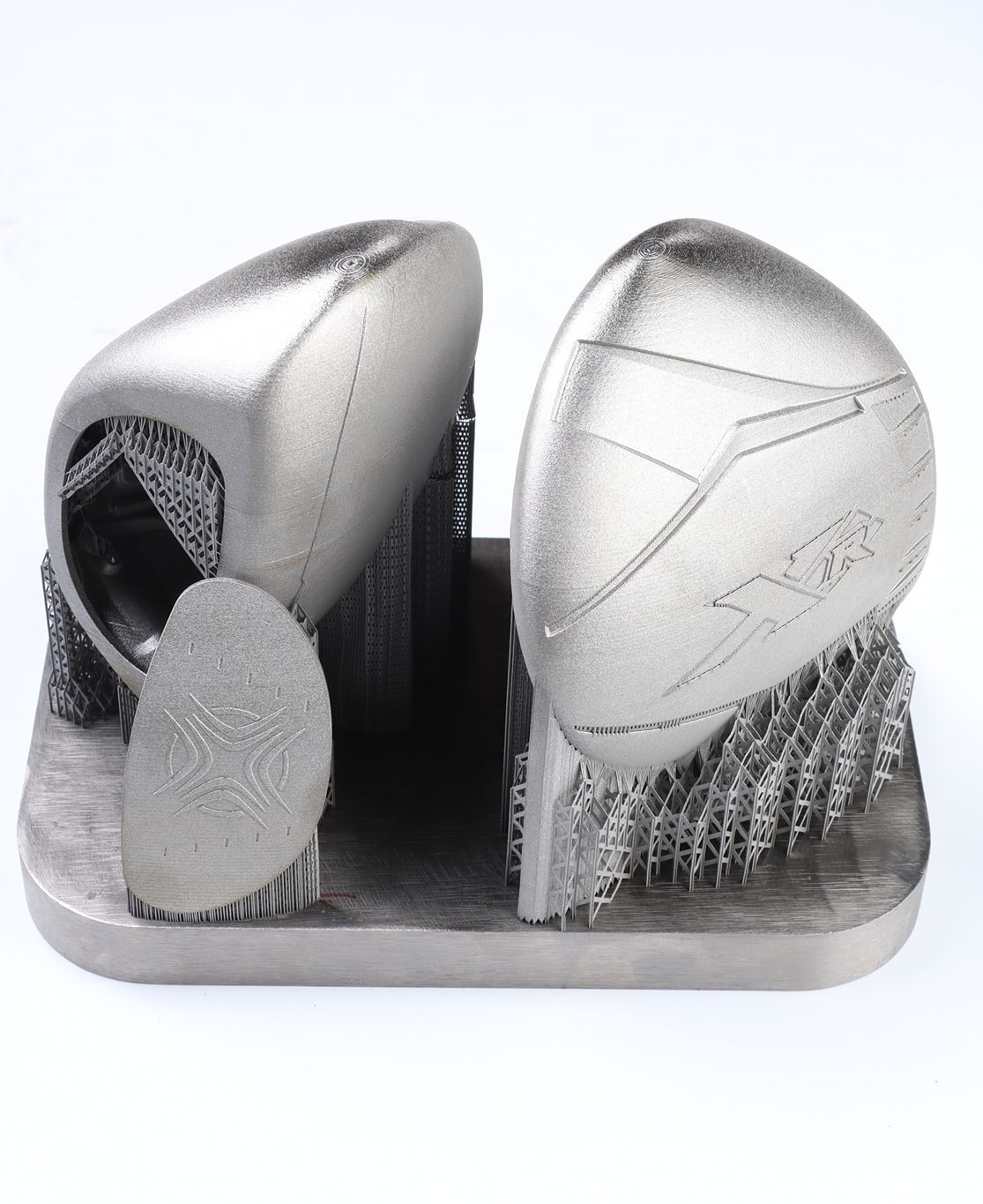
Stainless Steel 316L
316L stainless steel is a low-carbon, austenitic alloy widely used for its exceptional resistance to chemicals, acids, and high temperatures. As a biocompatible, food-grade material, it’s ideal for aerospace, medical implants, molds, prototypes, and luxury jewelry. It maintains strength and ductility under demanding conditions, making it a reliable choice for functional and end-use parts.
Surface Characteristics
Surface Roughness (As-Sandblasted): ≥6 μm
As-Printed State
Hardness: 93±3 HRB-Tensile Strength: 700±100 MPa-Yield Strength: 510±100 MPa-Elongation: 35±10%
After Heat Treatment
Hardness: 93±3 HRB-Tensile Strength: 720±100 MPa-Yield Strength: 520±100 MPa-Elongation: 32±10%
Max. Part Size:
420mm × 420mm × 360mm
Tolerance and Precision:
±200μm or ±0.2%
Advantages
① Excellent corrosion resistance in air, steam, water, acids, and alkalis.
② High-temperature resistance up to 900°C.
③ Certified for medical and food-grade applications.
④ Maintains mechanical properties after post-processing.
Disadvantages
① Visible surface texture (Ra ~10 μm); minor pits and layer lines may appear.
② Higher density (7.9 g/cm³); not suitable for lightweight applications.
① Excellent corrosion resistance in air, steam, water, acids, and alkalis.
② High-temperature resistance up to 900°C.
③ Certified for medical and food-grade applications.
④ Maintains mechanical properties after post-processing.
Disadvantages
① Visible surface texture (Ra ~10 μm); minor pits and layer lines may appear.
② Higher density (7.9 g/cm³); not suitable for lightweight applications.
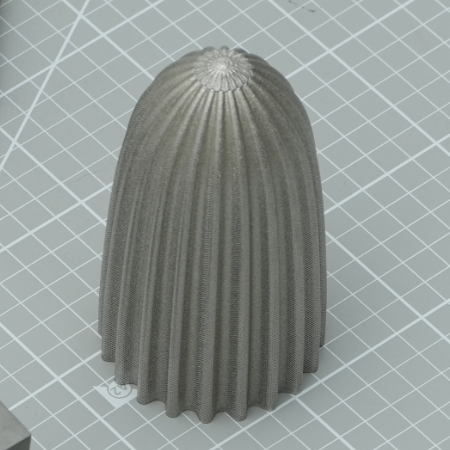
AlSi10Mg is a lightweight aluminum alloy with excellent strength-to-weight ratio, good thermal conductivity, and reliable mechanical properties. Known for its low density and great cost-effectiveness, this alloy is ideal for complex geometries, heat-resistant parts, and functional prototypes in aerospace, automotive, and electronics.
Surface Characteristics
Surface Roughness: ≥7 μm-Flame Resistance: V0
As-Printed State
Hardness: 69±3 HRB-Tensile Strength: 440±50 MPa-Yield Strength: 240±50 MPa-Elongation: 6±3%-Tensile Modulus: 2200–2770 MPa-Flexural Strength: 77–144 MPa
After Heat Treatment
Hardness: 63±3 HRB-Tensile Strength: 320±50 MPa-Yield Strength: 210±50 MPa-El
Max. Part Size:
427mm × 527mm × 460mm
Tolerance and Precision:
±200μm or ±0.2%
Advantages
① Cost-effective for complex part production.
② Higher strength than traditional cast aluminum.
③ Fast lead time for parts ≤100 mm (as fast as 48 hours).
④ Supports large-format printing (up to 427 × 527 × 460 mm); contact sales for lead time.
Disadvantages
① Relatively low elongation in as-printed condition.
② Maximum heat resistance limited to 200 °C.
③ Slight surface porosity and layer texture (Ra ~10 μm).
① Cost-effective for complex part production.
② Higher strength than traditional cast aluminum.
③ Fast lead time for parts ≤100 mm (as fast as 48 hours).
④ Supports large-format printing (up to 427 × 527 × 460 mm); contact sales for lead time.
Disadvantages
① Relatively low elongation in as-printed condition.
② Maximum heat resistance limited to 200 °C.
③ Slight surface porosity and layer texture (Ra ~10 μm).
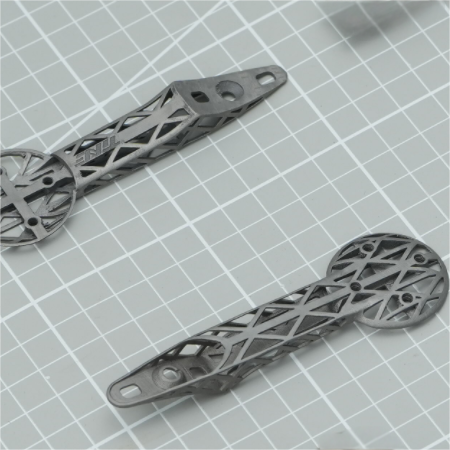
Titanium alloy TC4, also known as Ti6Al4V, is a medium-strength α-β phase titanium alloy with excellent mechanical properties, biocompatibility, and corrosion resistance. It is widely used in the aerospace, medical, and chemical industries.
As-Printed State
Surface roughness (sandblasted) ≥7μm-Hardness: HRC 38±3-Yield strength: 1050±50 MPa-Elongation: 7±3%-Tensile strength: 1230±50 MPa
Post-Heat Treatment
Hardness: HRC 35±3-Yield strength: 950±50 MPa-Elongation: 13±3%-Tensile strength: 1015±50 MPa
Key Notes
"As-printed" emphasizes the raw manufactured state.-"Post-heat treatment" replaces "heat-treated" for technical accuracy.-Units follow ISO/ASTM standards (e.g., MPa not Mpa).
Max. Part Size:
350mm x 400mm x 360mm
Tolerance and Precision:
±200μm or ±0.2%
Advantages
① High strength with tensile strength up to 1230 ± 50 MPa.
② Low density (4.5 g/cm³), enabling lightweight components.
③ Excellent heat resistance up to 400 °C.
④ Superior corrosion resistance, ideal for harsh environments.
Disadvantages
① Minor surface pits and layer lines may be present.
② Surface roughness typically around Ra 10; may require post-processing for smoother finish.
① High strength with tensile strength up to 1230 ± 50 MPa.
② Low density (4.5 g/cm³), enabling lightweight components.
③ Excellent heat resistance up to 400 °C.
④ Superior corrosion resistance, ideal for harsh environments.
Disadvantages
① Minor surface pits and layer lines may be present.
② Surface roughness typically around Ra 10; may require post-processing for smoother finish.
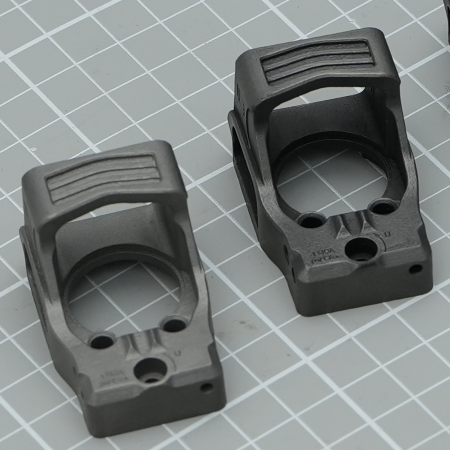
17-4PH is a precipitation-hardened stainless steel known for its excellent corrosion resistance, high tensile strength at room temperature, and good weldability. It is widely used in tire mold manufacturing, medical applications, and various industrial tooling scenarios.
As-Printed State
Surface roughness (sandblasted): ≥6 μm-Hardness: HRB 94±3-Tensile strength: 900±100 MPa-Yield strength: 560±100 MPa-Elongation: 28±2%
Post-Heat Treatment
Hardness: HRB 41±3-Tensile strength: 1300±100 MPa-Yield strength: 1100±100 MPa-Elongation: 16±2%
Key Notes
"As-printed" refers to direct metal laser sintered (DMLS) state-H900 heat treatment condition shown (solution annealed + aged)-Hardness converts to ~HRC 38 as-printed / HRC 22 post-treatment
Max. Part Size:
320mm × 360mm × 360mm
Tolerance and Precision:
±200μm or ±0.2%
Advantages
① High tensile strength up to 1310 MPa (after heat treatment).
② High surface hardness, reaching ~41 HRC.
③ Good thermal stability, with performance up to 400 °C.
Disadvantages
① Reduced elongation after heat treatment (≤16%).
② Very low or negligible magnetism post-treatment.
① High tensile strength up to 1310 MPa (after heat treatment).
② High surface hardness, reaching ~41 HRC.
③ Good thermal stability, with performance up to 400 °C.
Disadvantages
① Reduced elongation after heat treatment (≤16%).
② Very low or negligible magnetism post-treatment.
.png)
Aluminum 6061 is a lightweight, high-strength alloy with excellent machinability, weldability, and corrosion resistance. It is one of the most popular aluminum materials for 3D printing, especially suitable for parts requiring good surface quality and mechanical performance.
As-Printed State
Surface roughness (sandblasted):≥7μm-Hardness:90±10HRB-Tensile strength:260±40MPa-Yield strength:202±40MPa-Elongation:14±5%
Post-Heat Treatment
Hardness:120±30HRB-Tensile strength:300±20MPa-Yield strength:250
Max. Part Size:
350mm × 400mm × 360mm
Tolerance and Precision:
±200μm or ±0.2%
Advantages
① Excellent machinability; easy to process and shape.
② Lightweight with low density; ideal for weight-sensitive applications.
③ Supports anodizing, electrophoresis, and other surface treatments for enhanced durability and appearance.
Disadvantages
① Poor heat resistance; maximum service temperature is 120°C.
② Slight surface porosity and visible layer lines; typical surface roughness around Ra ~10 μm.
① Excellent machinability; easy to process and shape.
② Lightweight with low density; ideal for weight-sensitive applications.
③ Supports anodizing, electrophoresis, and other surface treatments for enhanced durability and appearance.
Disadvantages
① Poor heat resistance; maximum service temperature is 120°C.
② Slight surface porosity and visible layer lines; typical surface roughness around Ra ~10 μm.
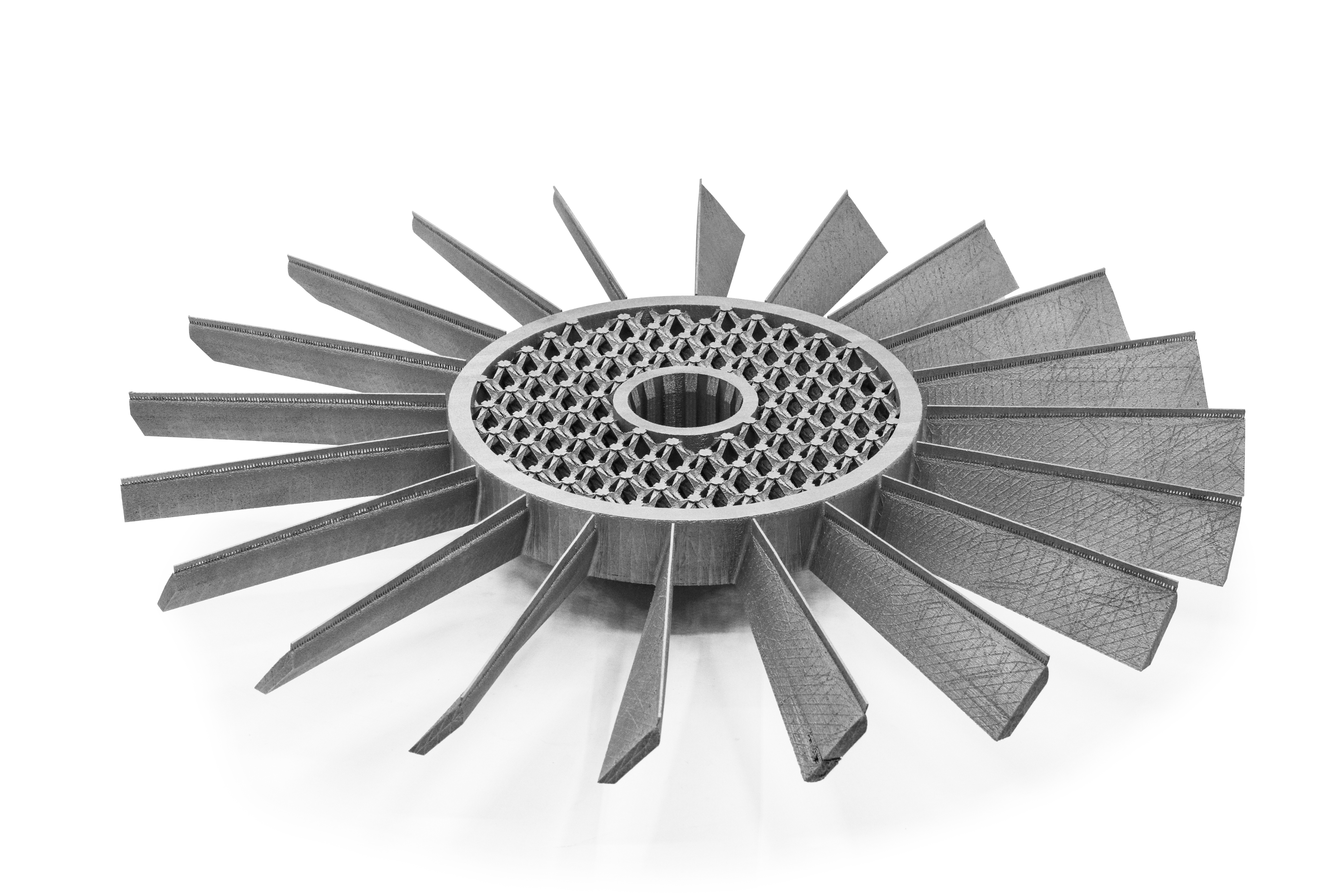
A maraging steel with ultra-high strength, toughness, and stability, ideal for molds, dies, and aerospace tooling.
As-Printed State
Surface roughness (sandblasted) ≥7μm-Hardness: HRC 38±3-Yield strength: 1050±50 MPa-Elongation: 7±3%-Tensile strength: 1230±50 MPa
Post-Heat Treatment
Hardness: HRC 52±2-Yield strength: 1950±100 MPa-Elongation: 5±2%-Tensile strength: 2100±100 MPa
Key Notes
"As-printed" emphasizes the raw manufactured state.-Heat treatment significantly improves strength but reduces ductility.-Commonly used in mold and tool making.
Max. Part Size:
350mm x 400mm x 360mm
Tolerance and Precision:
±200μm or ±0.2%
Advantages
① High strength and hardness after aging treatment; ideal for tooling and molds.
② Good dimensional stability and weldability.
③ Suitable for thin-walled structures and complex geometries.
Disadvantages
① Low corrosion resistance; requires post-treatment or coating.
② High residual stress after printing; heat treatment is essential.
① High strength and hardness after aging treatment; ideal for tooling and molds.
② Good dimensional stability and weldability.
③ Suitable for thin-walled structures and complex geometries.
Disadvantages
① Low corrosion resistance; requires post-treatment or coating.
② High residual stress after printing; heat treatment is essential.
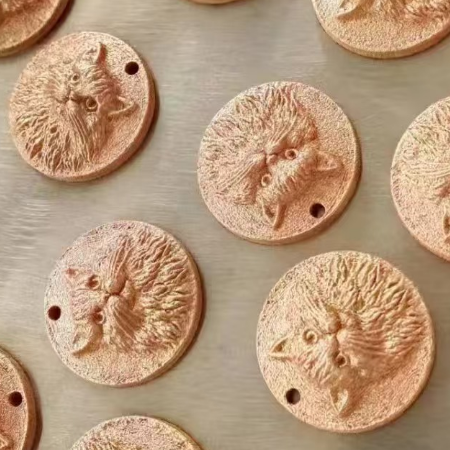
A copper alloy offering high thermal/electrical conductivity and strength, widely used in electrodes and cooling channels.
As-Printed State
Surface roughness (sandblasted) ≥8μm-Hardness: 80±10 HRB-Yield strength: 200±20 MPa-Elongation: 18±5%-Tensile strength: 250±20 MPa
Post-Heat Treatment
Hardness: 110±10 HRB-Yield strength: 400±20 MPa-Elongation: 10±3%-Tensile strength: 470±20 MPa
Key Notes
Heat treatment improves strength and conductivity.-Surface oxidation is a concern for high-temp applications.-Used for cooling inserts and electrodes.
Max. Part Size:
350mm x 400mm x 360mm
Tolerance and Precision:
±200μm or ±0.2%
Advantages
① Excellent thermal and electrical conductivity; ideal for heat transfer components.
② Good mechanical strength after aging treatment.
③ Suitable for conformal cooling inserts and electrodes.
Disadvantages
① Prone to oxidation; surface protection may be needed.
② Limited elongation; brittle in as-printed state.
① Excellent thermal and electrical conductivity; ideal for heat transfer components.
② Good mechanical strength after aging treatment.
③ Suitable for conformal cooling inserts and electrodes.
Disadvantages
① Prone to oxidation; surface protection may be needed.
② Limited elongation; brittle in as-printed state.
.png)
A tin bronze alloy with good wear and corrosion resistance, suitable for bearings, bushings, and structural parts.
As-Printed State
Surface roughness (sandblasted) ≥8μm-Hardness: 80±10 HRB-Yield strength: 200±20 MPa-Elongation: 18±5%-Tensile strength: 250±20 MPa
Post-Heat Treatment
Hardness: 110±10 HRB-Yield strength: 400±20 MPa-Elongation: 10±3%-Tensile strength: 470±20 MPa
Key Notes
Heat treatment improves strength and conductivity.-Surface oxidation is a concern for high-temp applications.-Used for cooling inserts and electrodes.
Max. Part Size:
350mm x 400mm x 360mm
Tolerance and Precision:
±200μm or ±0.2%
Advantages
① Excellent corrosion and wear resistance.
② Good castability and pressure resistance.
③ Suitable for marine and mechanical parts such as bushings and bearings.
Disadvantages
① Moderate strength; not suitable for high-load applications.
② Surface roughness requires polishing for high-precision use.
① Excellent corrosion and wear resistance.
② Good castability and pressure resistance.
③ Suitable for marine and mechanical parts such as bushings and bearings.
Disadvantages
① Moderate strength; not suitable for high-load applications.
② Surface roughness requires polishing for high-precision use.
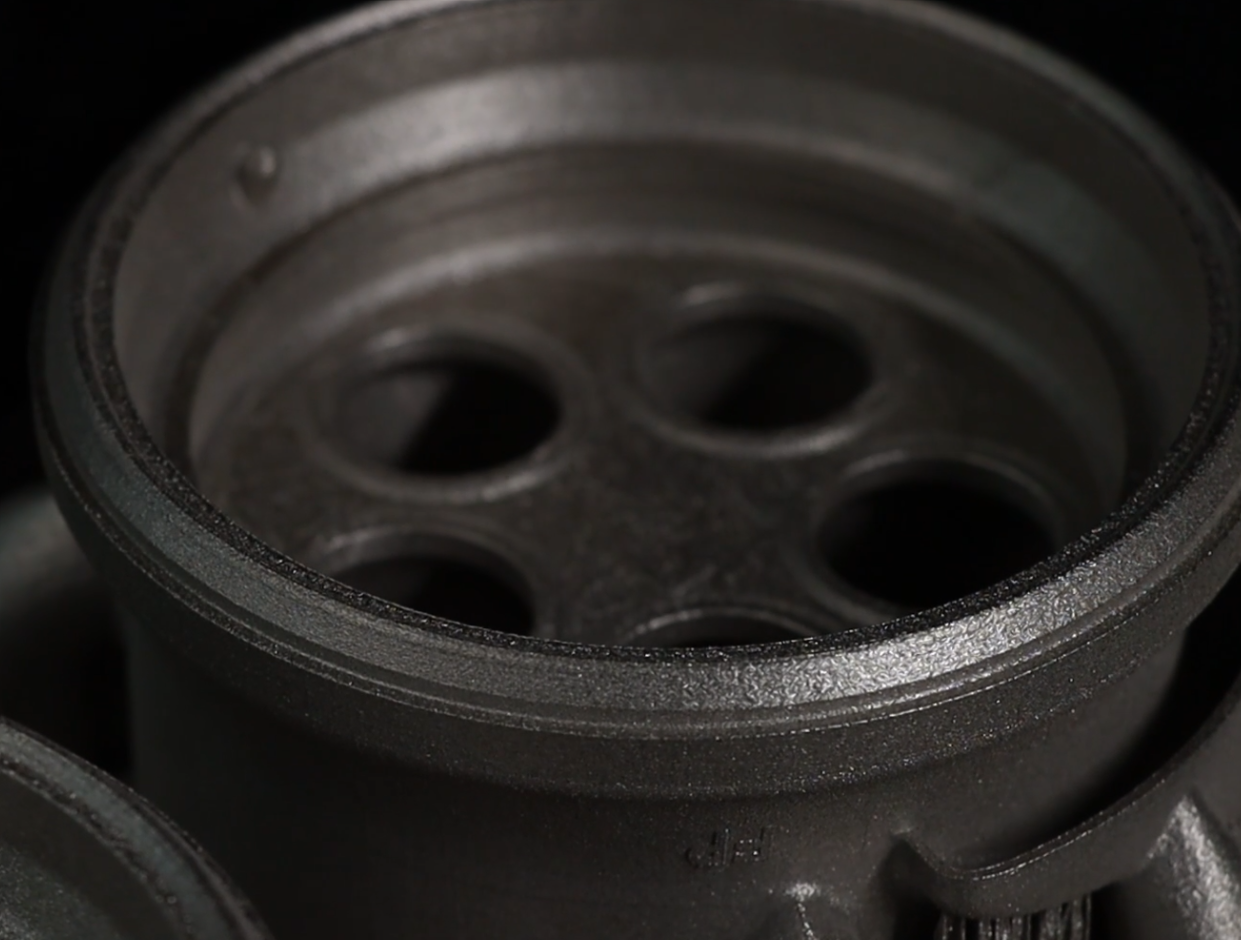
A nickel-based superalloy with excellent strength and fatigue resistance at high temperatures, ideal for turbines and engines.
As-Printed State
Surface roughness (sandblasted) ≥7μm-Hardness: HRC 30±3-Yield strength: 850±40 MPa-Elongation: 20±4%-Tensile strength: 980±40 MPa
Post-Heat Treatment
Hardness: HRC 42±2-Yield strength: 1250±50 MPa-Elongation: 13±3%-Tensile strength: 1450±50 MPa
Key Notes
Excellent high-temp strength post heat treatment.-Requires precise thermal cycles for aerospace use.-Equivalent to Inconel 718 (China GB/T code).
Max. Part Size:
350mm x 400mm x 360mm
Tolerance and Precision:
±200μm or ±0.2%
Advantages
① High strength and fatigue resistance at elevated temperatures.
② Excellent oxidation and corrosion resistance.
③ Ideal for aerospace turbines, engine parts, and high-stress components.
Disadvantages
① Difficult to machine post-printing due to high hardness.
② Warping risk during printing; requires controlled process parameters.
① High strength and fatigue resistance at elevated temperatures.
② Excellent oxidation and corrosion resistance.
③ Ideal for aerospace turbines, engine parts, and high-stress components.
Disadvantages
① Difficult to machine post-printing due to high hardness.
② Warping risk during printing; requires controlled process parameters.
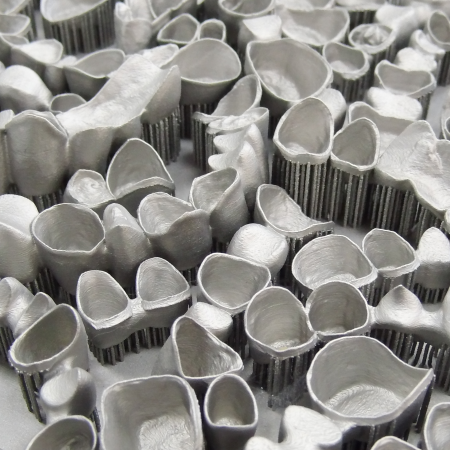
A cobalt-based alloy known for wear resistance and biocompatibility, used in implants, dental parts, and aerospace tools.
As-Printed State
Surface roughness (sandblasted) ≥9μm-Hardness: HRC 42±3-Yield strength: 780±40 MPa-Elongation: 8±2%-Tensile strength: 980±40 MPa
Post-Heat Treatment
Hardness: HRC 47±3-Yield strength: 950±40 MPa-Elongation: 10±3%-Tensile strength: 1150±40 MPa
Key Notes
Biocompatible and highly corrosion resistant.-Used in dental, orthopedic, and aerospace sectors.-Challenging to polish due to hardness.
Max. Part Size:
350mm x 400mm x 360mm
Tolerance and Precision:
±200μm or ±0.2%
Advantages
① Excellent biocompatibility and corrosion resistance.
② High hardness and wear resistance; ideal for implants.
③ Good strength at elevated temperatures.
Disadvantages
① Difficult to polish due to hardness.
② Brittle in as-printed condition; requires heat treatment for improved ductility.
① Excellent biocompatibility and corrosion resistance.
② High hardness and wear resistance; ideal for implants.
③ Good strength at elevated temperatures.
Disadvantages
① Difficult to polish due to hardness.
② Brittle in as-printed condition; requires heat treatment for improved ductility.
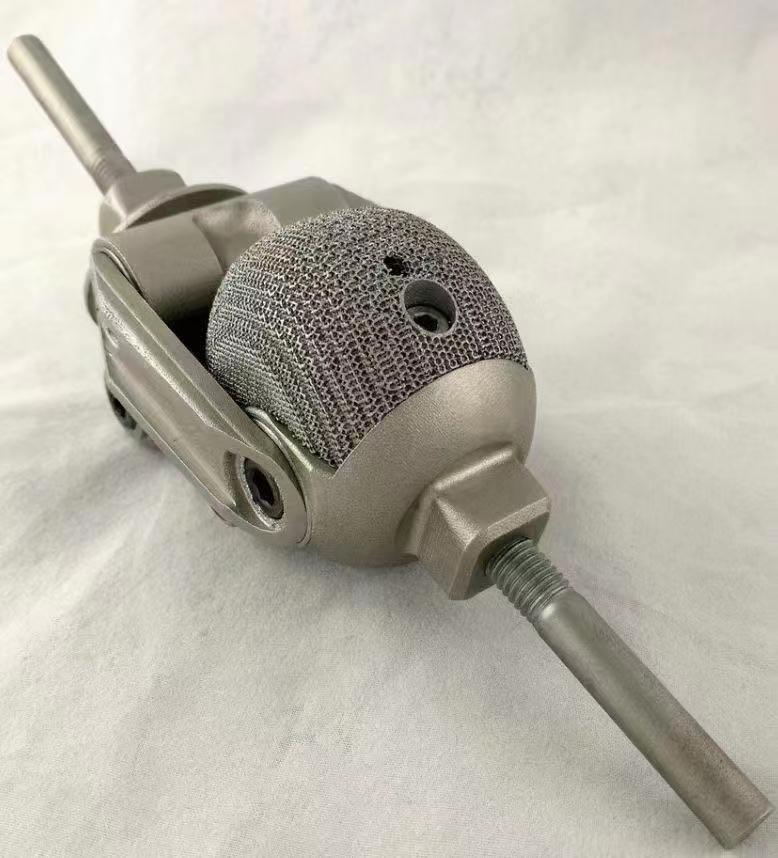
A pure titanium with excellent corrosion resistance and biocompatibility, ideal for medical, chemical, and marine uses.
As-Printed State
Surface roughness (sandblasted) ≥7μm-Hardness: 160±10 HV-Yield strength: 300±20 MPa-Elongation: 30±5%-Tensile strength: 450±30 MPa
Post-Heat Treatment
Hardness: 170±10 HV-Yield strength: 320±20 MPa-Elongation: 32±4%-Tensile strength: 470±30 MPa
Key Notes
Low strength but excellent biocompatibility and corrosion resistance.-Common in chemical processing and implants.-Reacts with oxygen at high temperatures.
Max. Part Size:
350mm x 400mm x 360mm
Tolerance and Precision:
±200μm or ±0.2%
Advantages
① High-purity titanium with superior corrosion resistance.
② Lightweight and highly biocompatible; suitable for medical and chemical use.
③ Good formability and weldability.
Disadvantages
① Low strength compared to alloyed titanium grades.
② Reactive at high temperatures; requires inert atmosphere processing.
① High-purity titanium with superior corrosion resistance.
② Lightweight and highly biocompatible; suitable for medical and chemical use.
③ Good formability and weldability.
Disadvantages
① Low strength compared to alloyed titanium grades.
② Reactive at high temperatures; requires inert atmosphere processing.
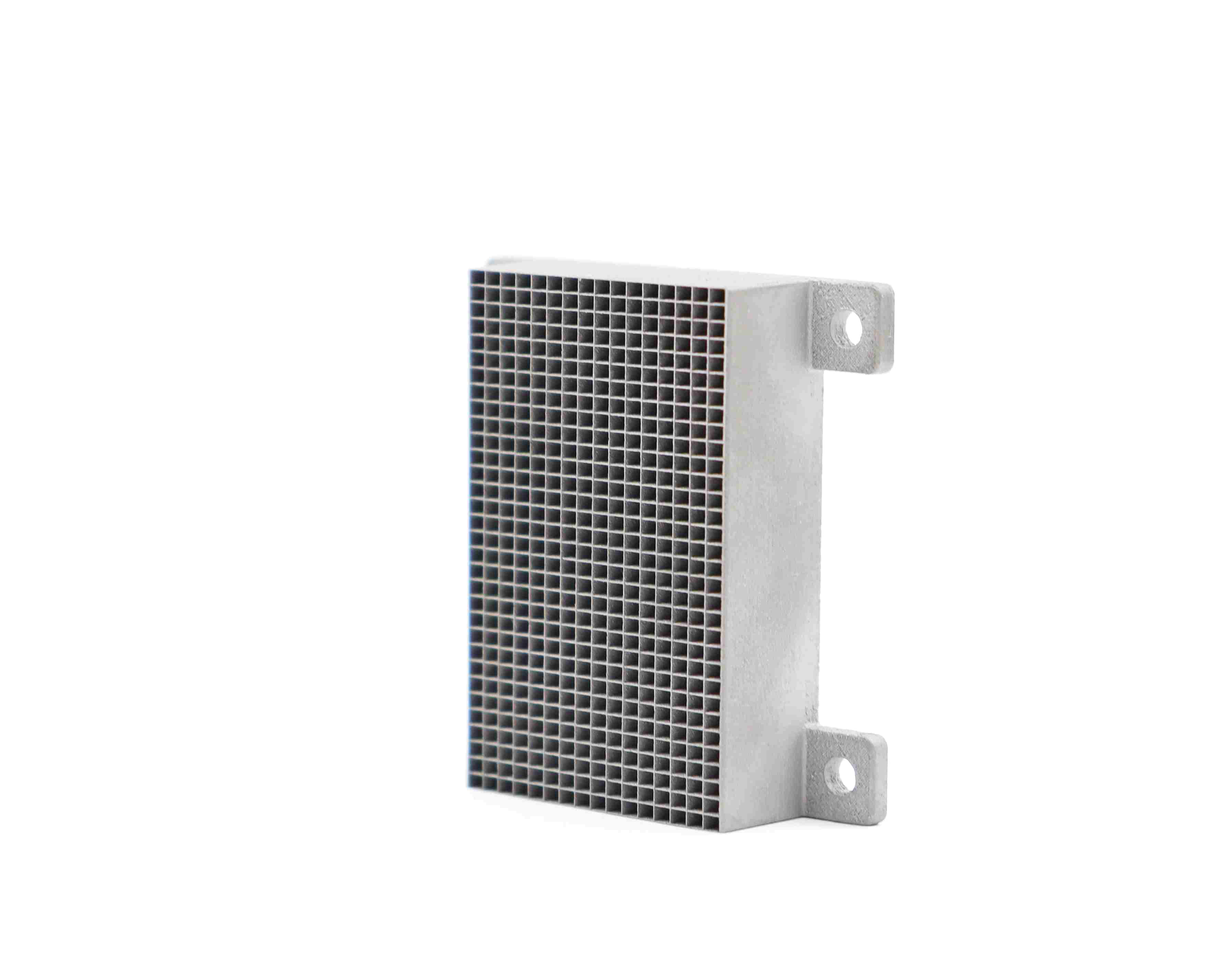
An ultra-dense metal with extreme heat resistance and strength, used in aerospace, electronics, and high-temp tooling.
As-Printed State
Surface roughness (sandblasted) ≥10μm-Hardness: 450±30 HV-Yield strength: 800±50 MPa-Elongation: 3±1%-Tensile strength: 900±50 MPa
Post-Heat Treatment
Hardness: 500±30 HV-Yield strength: 850±50 MPa-Elongation: 4±1%-Tensile strength: 950±50 MPa
Key Notes
Extremely high density and melting point.-Poor ductility; cracks easily during processing.-Ideal for extreme heat and radiation shielding.
Max. Part Size:
350mm x 400mm x 360mm
Tolerance and Precision:
±200μm or ±0.2%
Advantages
① Ultra-high melting point (~3420°C) and density.
② Excellent wear and heat resistance.
③ Ideal for radiation shielding, aerospace, and electrical applications.
Disadvantages
① Extremely brittle; difficult to machine or post-process.
② High residual stress and cracking risk during printing.
① Ultra-high melting point (~3420°C) and density.
② Excellent wear and heat resistance.
③ Ideal for radiation shielding, aerospace, and electrical applications.
Disadvantages
① Extremely brittle; difficult to machine or post-process.
② High residual stress and cracking risk during printing.