

OLA PA11Pro
Online 3D printing service
Get instant online quotes on parts in over 80 metal and plastic materials. Free shipping on all US orders. ISO 9001:2015, ISO 13485 and AS9100D certified.Start A New 3D Printing Quote
File type: STL, STP, STEP
Privacy: All your files are secure with us. Read our privacy policy.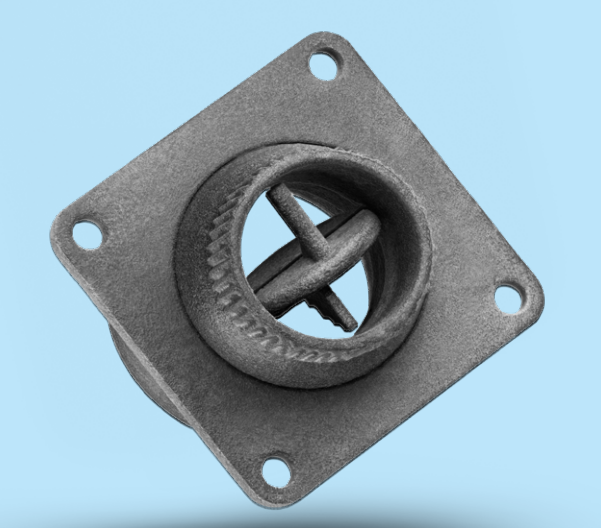
OLA PA11Pro
OLA PA11Pro is a high-performance nylon material made from castor oil, offering 100% bio-based environmental benefits. It provides exceptional ductility and impact resistance, making it ideal for mass production of strong, detailed parts across various industrial applications. Compared to PA12, PA11Pro is better suited for parts requiring flexibility and durability under dynamic stress.
ThermalProperties
HeatDeflectionTemperature:185℃(0.45MPa),47℃(1.82MPa)
MechanicalProperties
TensileModulus(ASTMD638):1.53GPa TensileStrength(ASTMD638):51MPa ElongationatBreak(ASTMD638):30% FlexuralModulus(ASTMD790):1.34GPa FlexuralStrength(ASTMD790):51MPa NotchedIzodImpactStrength(ASTMD256):7.4J/m
Max. Part Size:
299mm × 199mm × 283mm
Tolerance and Precision:
±300 μm or ±0.3%
Advantages
① Outstanding ductility and impact resistance
② More suitable for mass production than PA12
③ 100% bio-based and sustainable
④ Excellent for producing durable, complex functional parts
Disadvantages
① Slight color inconsistency (top surfaces darker than sides)
② Post-processing may affect biocompatibility compliance
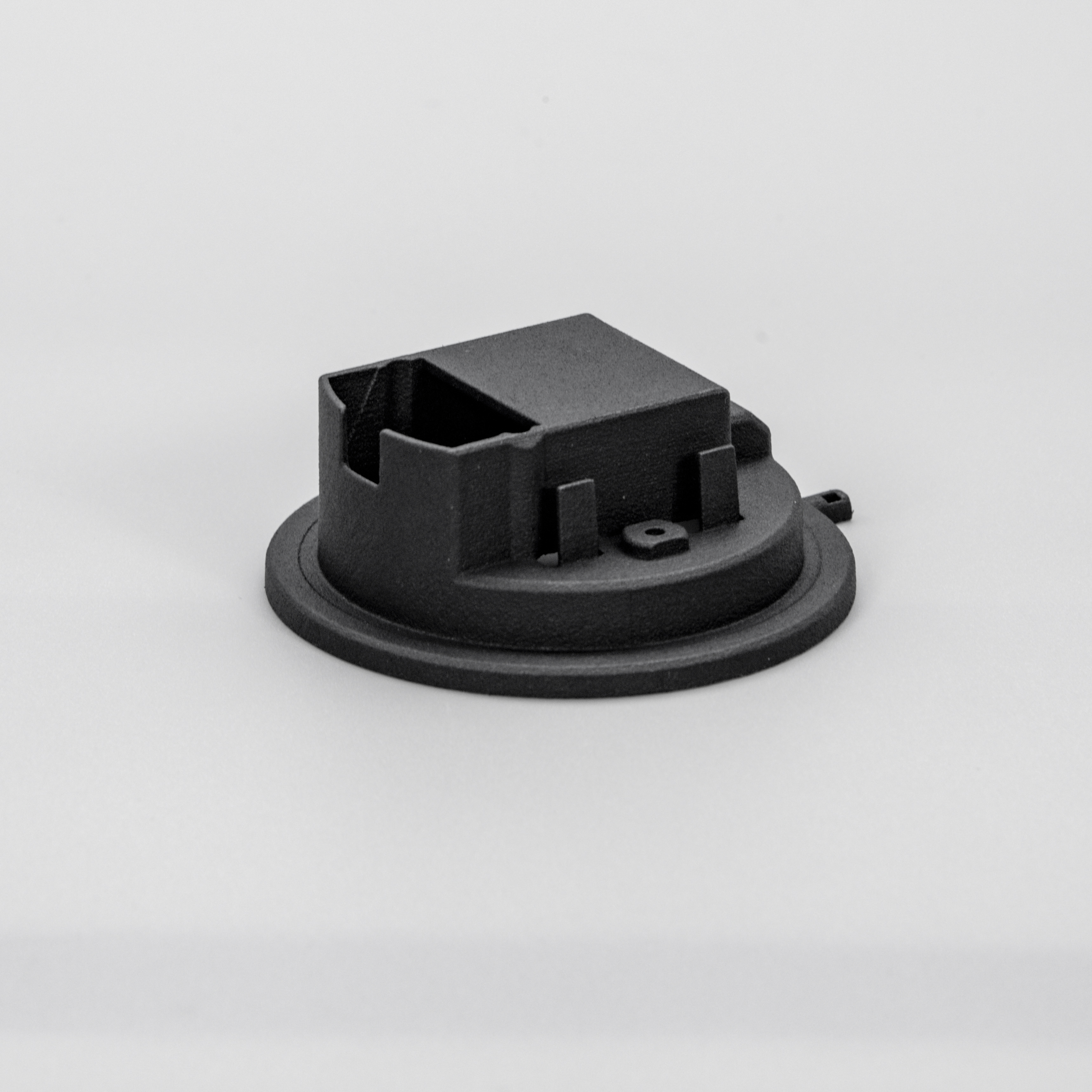
OLA 7100Pro is a cost-effective nylon-like PA12 SLS material offering excellent mechanical properties and durability. It’s engineered for long-term usage, with high dimensional stability and consistent strength across all directions. Compared to traditional PA12, 7100Pro provides similar performance at a significantly lower cost, making it one of the most economical and widely applicable SLS materials on the market.
ThermalProperties
HeatDeflectionTemperature([email protected]):52℃ HeatDeflectionTemperature([email protected]):145℃ MeltingPoint(10℃/min):185.5℃
MechanicalProperties
ElongationatBreak(ISO527-1:2018):40%(X/Y) TensileModulus(ISO527-1:2019):1450MPa(X/Y) TensileStrength(ISO527-1:2019):42MPa(X/Y) FlexuralModulus(GB/T9341-2008):1400MPa(X/Y) FlexuralStrength(GB/T9341-2008):48MPa(X/Y) NotchedImpactStrength(GB/T1843-2008):10KJ/m²(X/Y) UnnotchedImpactStrength(GB/T1843-2008):32KJ/m²(X/Y)
Max. Part Size:
350mm × 350mm × 400mm
Tolerance and Precision:
±300 μm or ±0.3%
Advantages
① Excellent toughness and mechanical strength
② Isotropic properties (consistent across all directions)
③ Good heat and chemical resistance
④ Lower cost compared to standard PA12 SLS materials
⑤ Suitable for both prototyping and functional production parts
Disadvantages
① Not recommended for electrical insulation testing
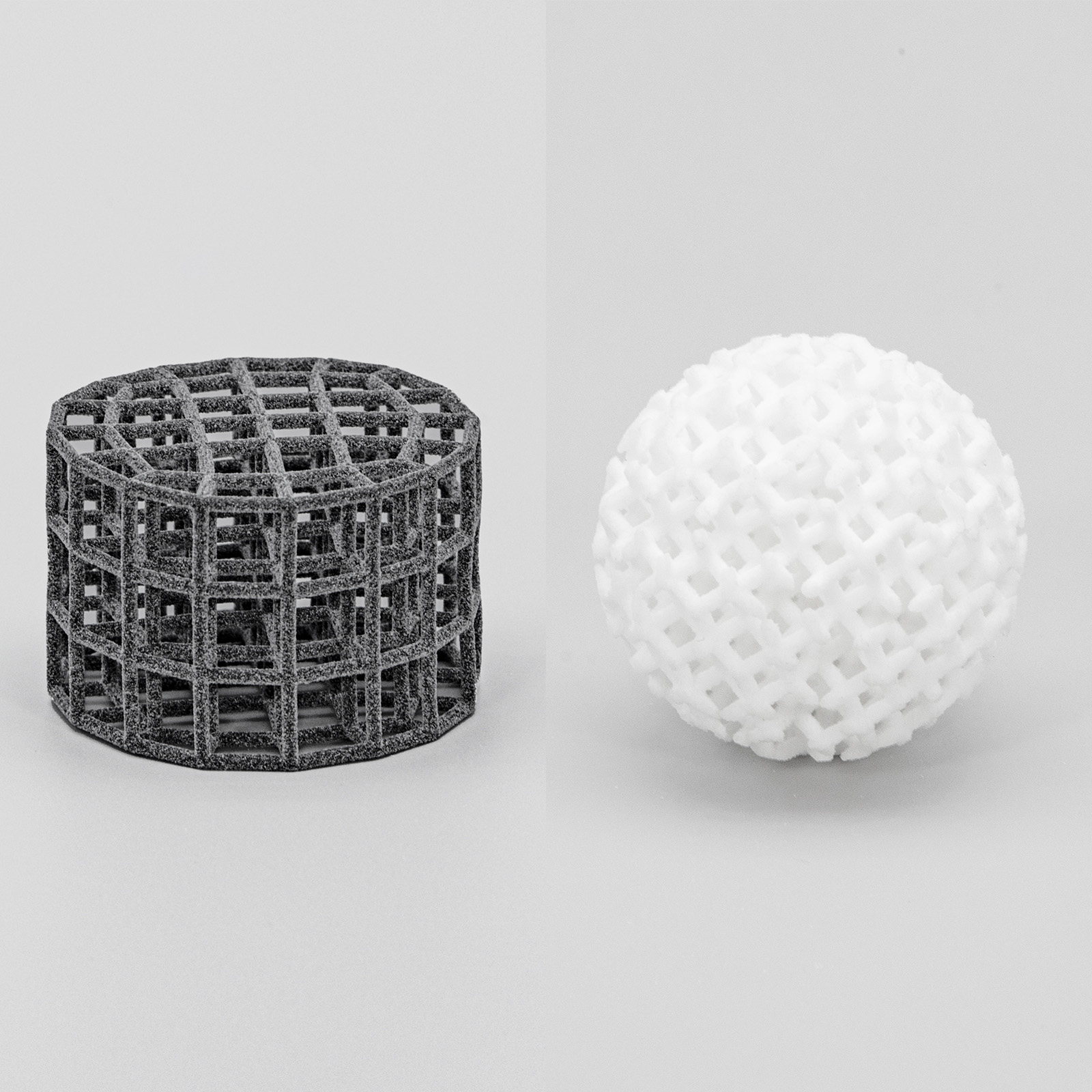
OLA TPU is a highly versatile material known for its flexibility, resilience, and ability to produce detailed and intricate parts. It is suitable for use in cushioning applications and wearable parts. The material has passed ISO 10993-10 (skin sensitization) and ISO 10993-5 (cytotoxicity) tests, making it skin-safe.
ThermalProperties
MeltingPoint:120℃–150℃
MechanicalProperties
TensileModulus:75–85MPa TensileStrength:7–9MPa ElongationatBreak:130%–280% FlexuralModulus:70–75MPa NotchedImpactStrength:44–46kJ/m²
Max. Part Size:
White (SLS): 350 mm × 350 mm × 250 mm
Tolerance and Precision:
±700 μm or ±0.7%
Advantages
① High flexibility and shock absorption
② Suitable for printing complex and detailed structures
③ Excellent UV and hydrolysis resistance
④ Biocompatible (ISO 10993-10/5 compliant)
Disadvantages
① Equipment/build size varies by color:
White: SLS 350×350×250mm
Gray-Black: MJF 377×277×380mm
① High flexibility and shock absorption
② Suitable for printing complex and detailed structures
③ Excellent UV and hydrolysis resistance
④ Biocompatible (ISO 10993-10/5 compliant)
Disadvantages
① Equipment/build size varies by color:
White: SLS 350×350×250mm
Gray-Black: MJF 377×277×380mm
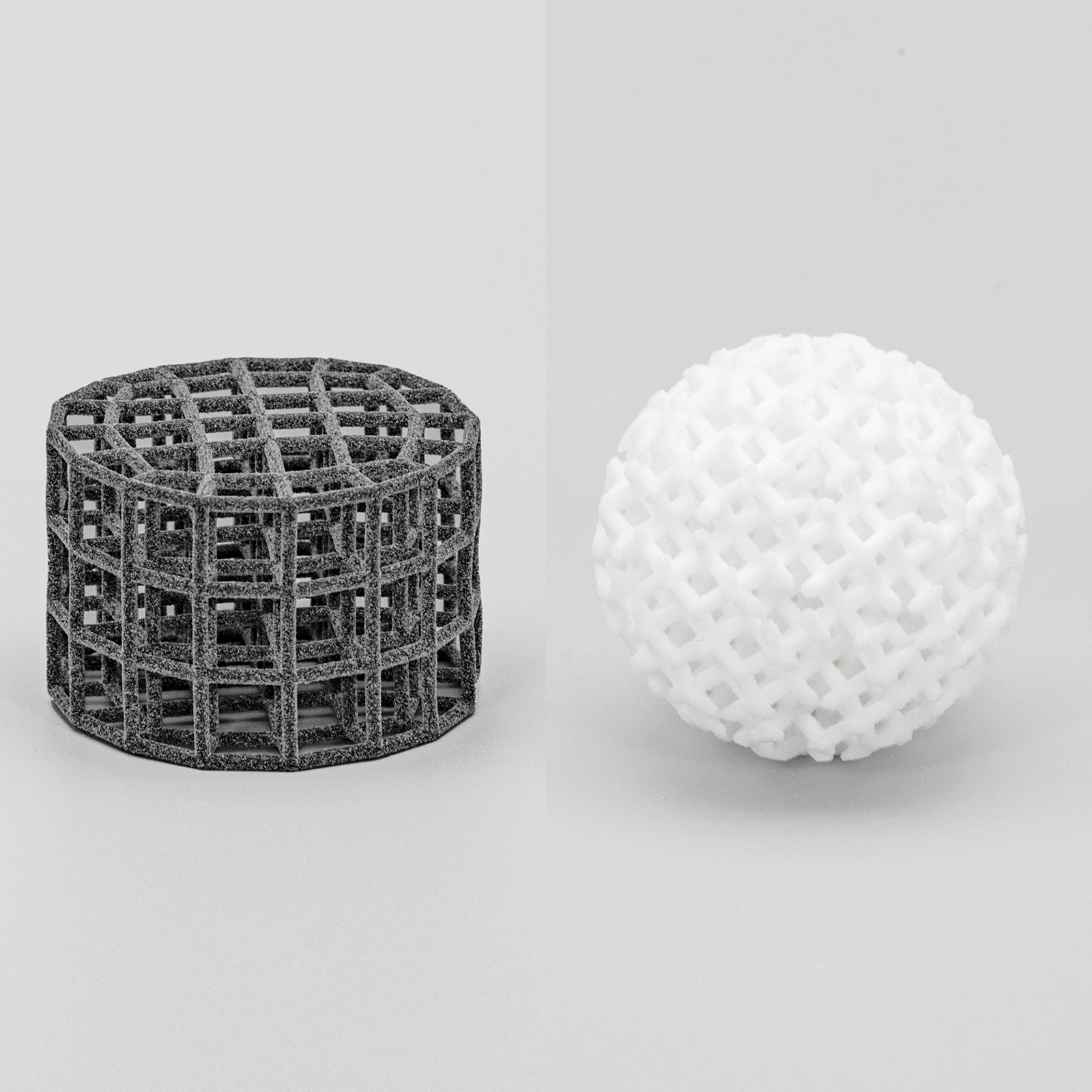
OLA TPU is a highly versatile material known for its flexibility, resilience, and ability to produce detailed and intricate parts. It is suitable for use in cushioning applications and wearable parts. The material has passed ISO 10993-10 (skin sensitization) and ISO 10993-5 (cytotoxicity) tests, making it skin-safe.
ThermalProperties
MeltingPoint:120℃–150℃
MechanicalProperties
TensileModulus:75–85MPa TensileStrength:7–9MPa ElongationatBreak:130%–280% FlexuralModulus:70–75MPa NotchedImpactStrength:44–46kJ/m²
Max. Part Size:
Gray-Black (MJF): 377 mm × 277 mm × 380 mm
Tolerance and Precision:
±700 μm or ±0.7%
Advantages
① High flexibility and shock absorption
② Suitable for printing complex and detailed structures
③ Excellent UV and hydrolysis resistance
④ Biocompatible (ISO 10993-10/5 compliant)
Disadvantages
① Equipment/build size varies by color:
White: SLS 350×350×250mm
Gray-Black: MJF 377×277×380mm
① High flexibility and shock absorption
② Suitable for printing complex and detailed structures
③ Excellent UV and hydrolysis resistance
④ Biocompatible (ISO 10993-10/5 compliant)
Disadvantages
① Equipment/build size varies by color:
White: SLS 350×350×250mm
Gray-Black: MJF 377×277×380mm
.png)
OLA 6130 Carbon-Fiber Reinforced Nylon (PA6+CF)
OLA 6130 PA6+CF is a carbon fiber–reinforced nylon material that delivers superior strength, stiffness, and heat resistance. Engineered for high-performance applications, it can replace traditional aluminum alloys and is suitable for complex load-bearing structures. Ideal for functional testing, small-batch production, and parts traditionally made via CNC or injection molding.
ThermalProperties
HeatDeflectionTemperature([email protected]):210℃ HeatDeflectionTemperature([email protected]):214℃
MechanicalProperties
TensileModulus(ISO527-1:2019):10000MPa TensileStrength(ISO527-1:2019):110MPa ElongationatBreak(ISO527-1:2018):2.5% FlexuralModulus(ISO178:2019):6000MPa FlexuralStrength(ISO178:2019):135MPa NotchedImpactStrength(ISO180:2019):4KJ/m² UnnotchedImpactStrength(ISO180:2019):25KJ/m²
Max. Part Size:
335mm × 335mm × 400mm
Tolerance and Precision:
±300 μm or ±0.3%
Advantages
① Exceptional mechanical strength and stiffness
② Excellent wear and heat resistance
③ Suitable for metal replacement in structural components
④ Corrosion-resistant for demanding industrial environments
Disadvantages
① Large shell parts may experience deformation
① Exceptional mechanical strength and stiffness
② Excellent wear and heat resistance
③ Suitable for metal replacement in structural components
④ Corrosion-resistant for demanding industrial environments
Disadvantages
① Large shell parts may experience deformation

OLA PA6+GF is a high-performance, glass fiber–reinforced polyamide material known for its outstanding mechanical properties, high heat resistance, and excellent chemical stability. With superior strength and stiffness, it is capable of withstanding heavy loads and impacts, making it ideal for demanding industrial applications.
ThermalProperties
HeatDeflectionTemperature:203℃ HeatDeflectionTemperature(Max):219℃
MechanicalProperties
TensileModulus:6585MPa TensileStrength:77MPa ElongationatBreak:1.7% FlexuralModulus:6066MPa FlexuralStrength:130MPa NotchedImpactStrength:4.2KJ/m² UnnotchedImpactStrength:13.6KJ/m²
Max. Part Size:
350mm × 350mm × 400mm
Tolerance and Precision:
±400 μm or ±0.4%
Advantages
① High thermal stability (203°C heat resistance)
② Extremely high mechanical strength/rigidity
③ Strong chemical corrosion resistance
Disadvantages
① Limited toughness
② Not suitable for threaded inserts/tapping
① High thermal stability (203°C heat resistance)
② Extremely high mechanical strength/rigidity
③ Strong chemical corrosion resistance
Disadvantages
① Limited toughness
② Not suitable for threaded inserts/tapping
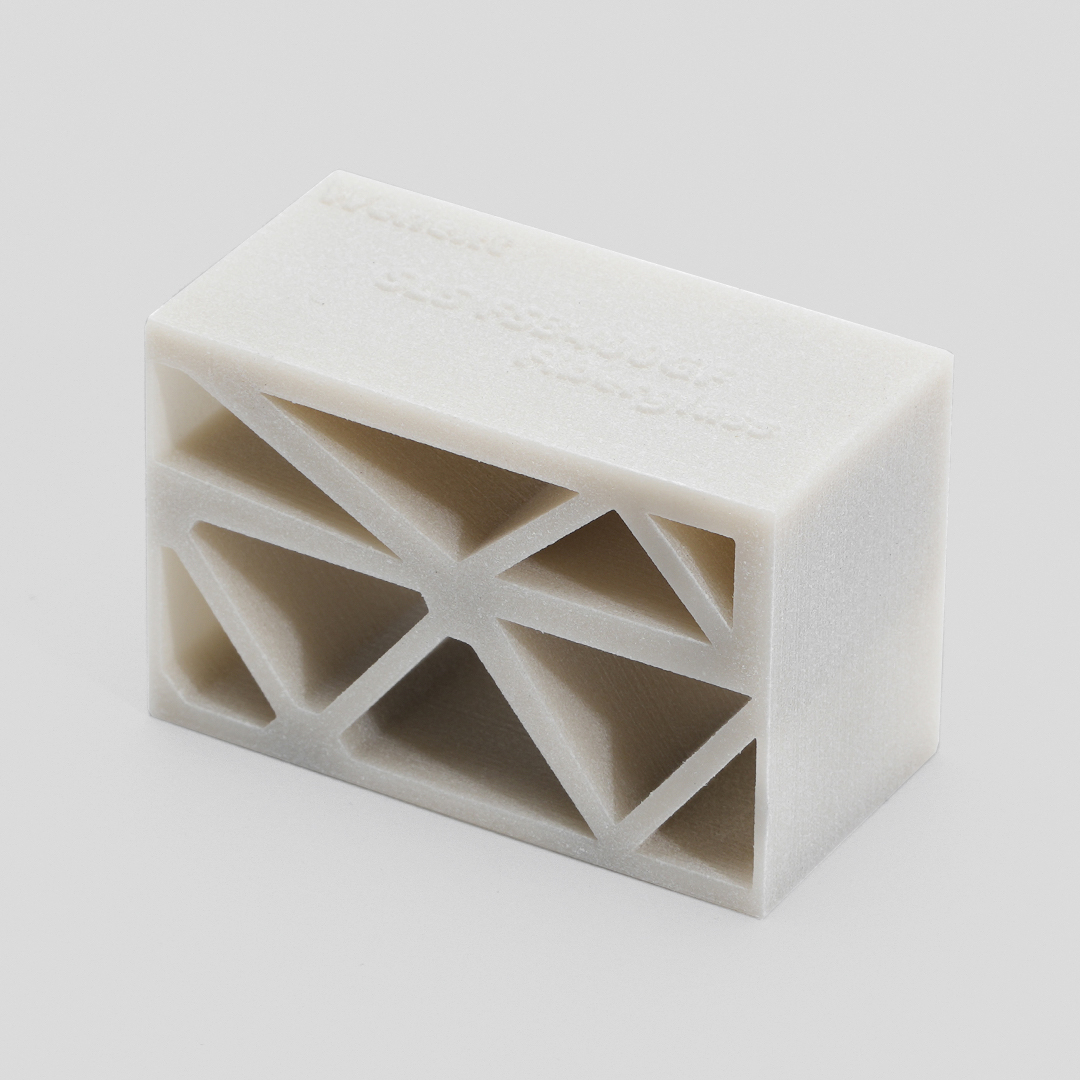
OLA 7200Pro Glass-Filled Nylon
OLA 7200Pro is a gray-black, glass bead–filled nylon material featuring a unique balance of excellent rigidity and good elongation at break. It is particularly suited for applications requiring high stiffness, heat resistance, and wear durability. This material is optimized for repeated use in demanding industrial environments.
ThermalProperties
HeatDeflectionTemp(ASTMD648,1.8MPa):126℃ HeatDeflectionTemp(ASTMD648,0.45MPa):184.4℃
MechanicalProperties
ElongationatBreak(ASTMD638):5%–8% TensileModulus(ASTMD256):2398MPa TensileStrength(ASTMD638):32MPa FlexuralModulus(ASTMD790):2241MPa FlexuralStrength(ASTMD790):71MPa NotchedIzodImpact(ASTMD256):29J/m UnnotchedIzodImpact(ASTMD256):264J/m
Max. Part Size:
Equipment Size: 550 mm × 550 mm × 850 mm Minimum Build Size: 500 mm × 500 mm × 820 mm
Tolerance and Precision:
±300 μm or ±0.3%
Advantages
① Excellent strength and heat resistance
② High reusability for repeated production cycles
③ Suitable for demanding mechanical/thermal conditions
Disadvantages
① Slightly rough surface texture
② Not ideal for smooth finish applications
① Excellent strength and heat resistance
② High reusability for repeated production cycles
③ Suitable for demanding mechanical/thermal conditions
Disadvantages
① Slightly rough surface texture
② Not ideal for smooth finish applications
.png)
OLA 7200 Glass-Fiber Reinforced Nylon
OLA 7200 is a glass-fiber reinforced nylon material offering significantly improved heat deflection temperature and mechanical strength compared to standard nylon. Its excellent structural integrity, stability under high temperatures, and resistance to chemicals make it a reliable choice for structural validation of product prototypes in demanding environments.
ThermalProperties
HeatDeflectionTemperature:152.4℃ MeltingPoint:184℃
MechanicalProperties
TensileStrength:44MPa TensileModulus:3500MPa ElongationatBreak:5% FlexuralStrength:65MPa FlexuralModulus:2400MPa NotchedImpactStrength:4.13KJ/m² UnnotchedImpactStrength:19.28KJ/m²
ElectricalProperties
DielectricConstant(60Hz):3.7
Max. Part Size:
Equitment sizes: 350 mm × 350 mm × 400 mm Minimum Printable Size: 350 mm × 350 mm × 400 mm
Tolerance and Precision:
±300 μm or ±0.3%
Advantages
① Excellent heat resistance and dimensional stability
② High toughness and mechanical strength
③ Good chemical resistance
④ Ideal for functional prototype validation
Disadvantages
① Grainy surface finish
② Color variations may occur (material/build temperature dependent)
① Excellent heat resistance and dimensional stability
② High toughness and mechanical strength
③ Good chemical resistance
④ Ideal for functional prototype validation
Disadvantages
① Grainy surface finish
② Color variations may occur (material/build temperature dependent)
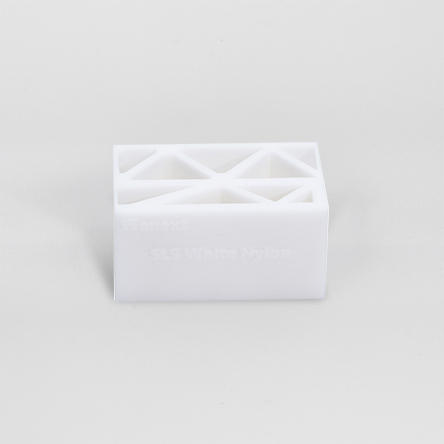
OLA 7000 Farsoon is a high-performance SLS nylon material known for its excellent heat deflection temperature and strength, making it suitable for functional parts. Post-processing with chemical vapor smoothing significantly enhances part quality by smoothing and sealing surfaces, improving water and air tightness, ensuring consistent post-treatment, maintaining dimensional accuracy, and reducing both labor and dyeing costs with a uniform color finish.
ThermalProperties
HeatDeflectionTemperature:134℃ MeltingPoint:183℃
MechanicalProperties
TensileStrength:33.3–39.8MPa TensileModulus:1600MPa ElongationatBreak:11%–19% FlexuralStrength:46.3MPa FlexuralModulus:1300MPa NotchedImpactStrength:4.9KJ/m² UnnotchedImpactStrength:13.2KJ/m²
ElectricalProperties
DielectricConstant(60Hz):3.5
Max. Part Size:
350mm × 350mm × 400mm
Tolerance and Precision:
±300 μm or ±0.3%
Advantages
① High heat resistance/toughness/strength for functional parts
② Support-free printing enables complex geometries
③ Chemical vapor smoothing enhances surface quality
④ Cost-efficient (reduces labor/post-processing)
⑤ Uniform dyed color consistency
Disadvantages
① Mild surface graininess
② Slightly lower dimensional accuracy vs OLA 8000 Resin
③ Premium pricing compared to standard materials
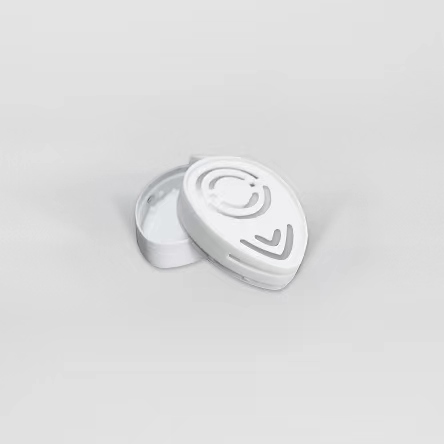
OLA 7000 EOS is a premium SLS nylon material printed using German-imported EOS equipment. It features excellent mechanical properties and a fine surface finish, making it well-suited for rapid manufacturing of plastic parts, spare part production, functional prototyping, master models for vacuum casting, and other moldless applications.
ThermalProperties
HeatDeflectionTemperature:132℃ MeltingPoint:183℃
MechanicalProperties
TensileStrength:35.8–38.6MPa TensileModulus:1600MPa ElongationatBreak:5.5%–14% FlexuralStrength:46.3MPa FlexuralModulus:1300MPa NotchedImpactStrength:4.9KJ/m² UnnotchedImpactStrength:13.2KJ/m²
ElectricalProperties
DielectricConstant:3.5
Max. Part Size:
360mm x 560mm x 660mm
Tolerance and Precision:
±300μm or ±0.3%
Advantages
① Excellent mechanical strength
② Smooth surface with high detail accuracy
③ High-precision EOS printing
④ Ideal for moldless functional/end-use parts
Disadvantages
① Slightly grainy surface texture
② Mechanical properties between resin and ABS levels
① Excellent mechanical strength
② Smooth surface with high detail accuracy
③ High-precision EOS printing
④ Ideal for moldless functional/end-use parts
Disadvantages
① Slightly grainy surface texture
② Mechanical properties between resin and ABS levels
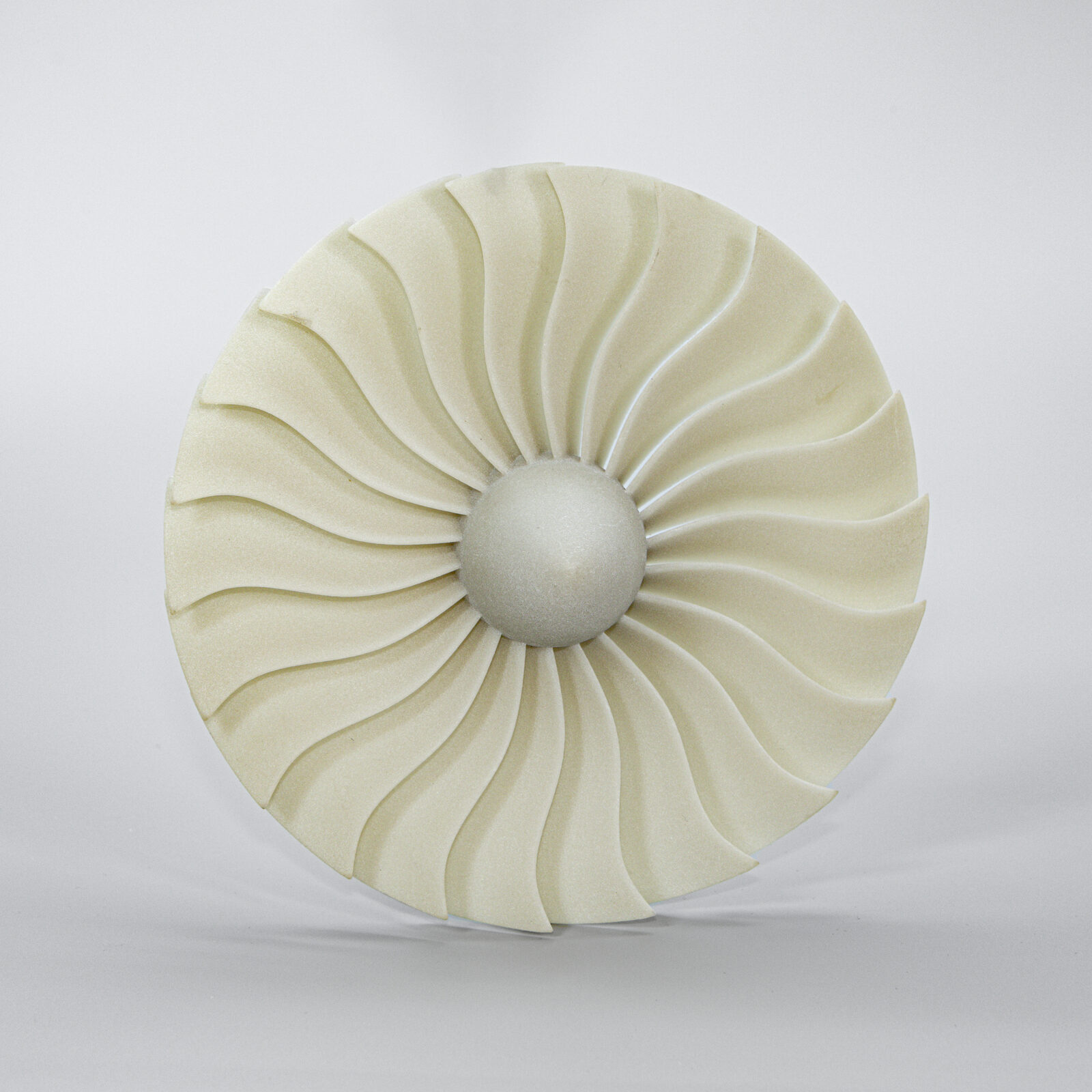
OLA P9000 Nylon (BASF) is an advanced SLS material that offers a balanced combination of rigidity, toughness, and wear resistance. It is particularly suitable for producing durable jigs, fixtures, enclosures, and components that undergo frequent mechanical stress or friction. Its chemical resistance also makes it ideal for applications exposed to aggressive environments.
ThermalProperties
HeatDeflectionTemperature:123℃
MechanicalProperties
TensileStrength:16.7MPa TensileModulus:1980MPa ElongationatBreak:55% FlexuralStrength:33MPa FlexuralModulus:2000MPa CharpyImpactStrength(Notched):3.0&17kJ/m² IzodImpactStrength(Notched):3.8&14kJ/m²
ElectricalProperties
DielectricConstant:3.331
Max. Part Size:
350mm × 350mm × 400mm
Tolerance and Precision:
±300μm or ±0.3%
Advantages
① Exceptional dimensional accuracy and toughness
② Superior chemical resistance for harsh environments
Disadvantages
① Slightly rough surface texture (SLS process characteristic)
① Exceptional dimensional accuracy and toughness
② Superior chemical resistance for harsh environments
Disadvantages
① Slightly rough surface texture (SLS process characteristic)