

Online 3D printing service
Get instant online quotes on parts in over 80 metal and plastic materials. Free shipping on all US orders. ISO 9001:2015, ISO 13485 and AS9100D certified.Start A New 3D Printing Quote
File type: STL, STP, STEP
Privacy: All your files are secure with us. Read our privacy policy.OLA3DP FDM 3D Printed Parts
FDM 3D printed parts can be built up to 24" x 36" x 36". Larger parts are produced on industrial FDM platforms, while prototyping PLA is built on desktop FFF machines with a build volume of 9.8" x 8.3" x 8.3". General tolerances apply before secondary finishing or post-processing unless otherwise specified. To learn more tips about FDM 3D printing, check out our Fused Deposition Modeling (FDM) Design Guide.

Fused Deposition Modeling 3D Printing Materials
Fortus FDM Materials Available at OLA 3D Printing
| Material Name | HDT | Tensile Strength | Elongation | Max Build |
|---|---|---|---|---|
Material Name OLA6100 ABS | HDT 104℃ | Tensile Strength 32.5–34.1MPa | Elongation 2.3%–3.1% | Max Build 300mm × 300mm × 300mm |
Material Name OLA6000 PLA | HDT 53℃ | Tensile Strength 60MPa | Elongation 18.30% | Max Build 256mm × 256mm × 256mm |
Material Name OLA Reinforced Nylon Carbon Fiber | HDT 187.5℃ | Tensile Strength 51.51±2.01MPa | Elongation 1.55±0.12% | Max Build 300mm × 220mm × 220mm |
Material Name OLA6200 ASA | HDT 105.3℃ | Tensile Strength — | Elongation 6.1%–7.3% | Max Build 250mm × 250mm × 250mm |
Material Name OLA 9085 | HDT 153℃ | Tensile Strength 42–69MPa | Elongation 2.2–5.8% | Max Build 914mm × 610mm × 914mm |
Material Name OLA 1010 | HDT 216℃ | Tensile Strength 48–81MPa | Elongation 2–3.3% | Max Build 914mm × 610mm × 914mm |
Material Name OLA ASA | HDT 91-98℃ | Tensile Strength 30-33MPa | Elongation 3-9% | Max Build 1000mm × 610mm × 610mm |
Material Name OLA PETG-CF | HDT 74℃; 68℃ | Tensile Strength — | Elongation — | Max Build 320mm × 320mm × 325mm |
Material Name OLA 6310PETG | HDT 69℃; 62℃ | Tensile Strength — | Elongation — | Max Build 320mm × 320mm × 325mm |
Material Name OLA 6320PET-CF | HDT 147.5℃; 105℃ | Tensile Strength — | Elongation — | Max Build 1200mm × 600mm × 600mm |
Material Name OLA 6500PEEK | HDT N/A | Tensile Strength — | Elongation — | Max Build 610mm × 508mm × 508mm |
Material Name OLA 6610PA6-CF | HDT 186℃; 164℃ | Tensile Strength — | Elongation — | Max Build 320mm × 320mm × 325mm |
Material Name OLA 6810PPS-CF | HDT 264℃; 235℃ | Tensile Strength — | Elongation — | Max Build 320mm × 320mm × 325mm |
Material Name OLA 6910TPU-95A-HF | HDT N/A | Tensile Strength — | Elongation — | Max Build 320mm × 320mm × 325mm |
Material Name OLA NylonCF | HDT 143℃ | Tensile Strength 34.4-75.6MPa | Elongation 1.2-1.9% | Max Build 914mm × 610mm × 914mm |
Prototyping PLA
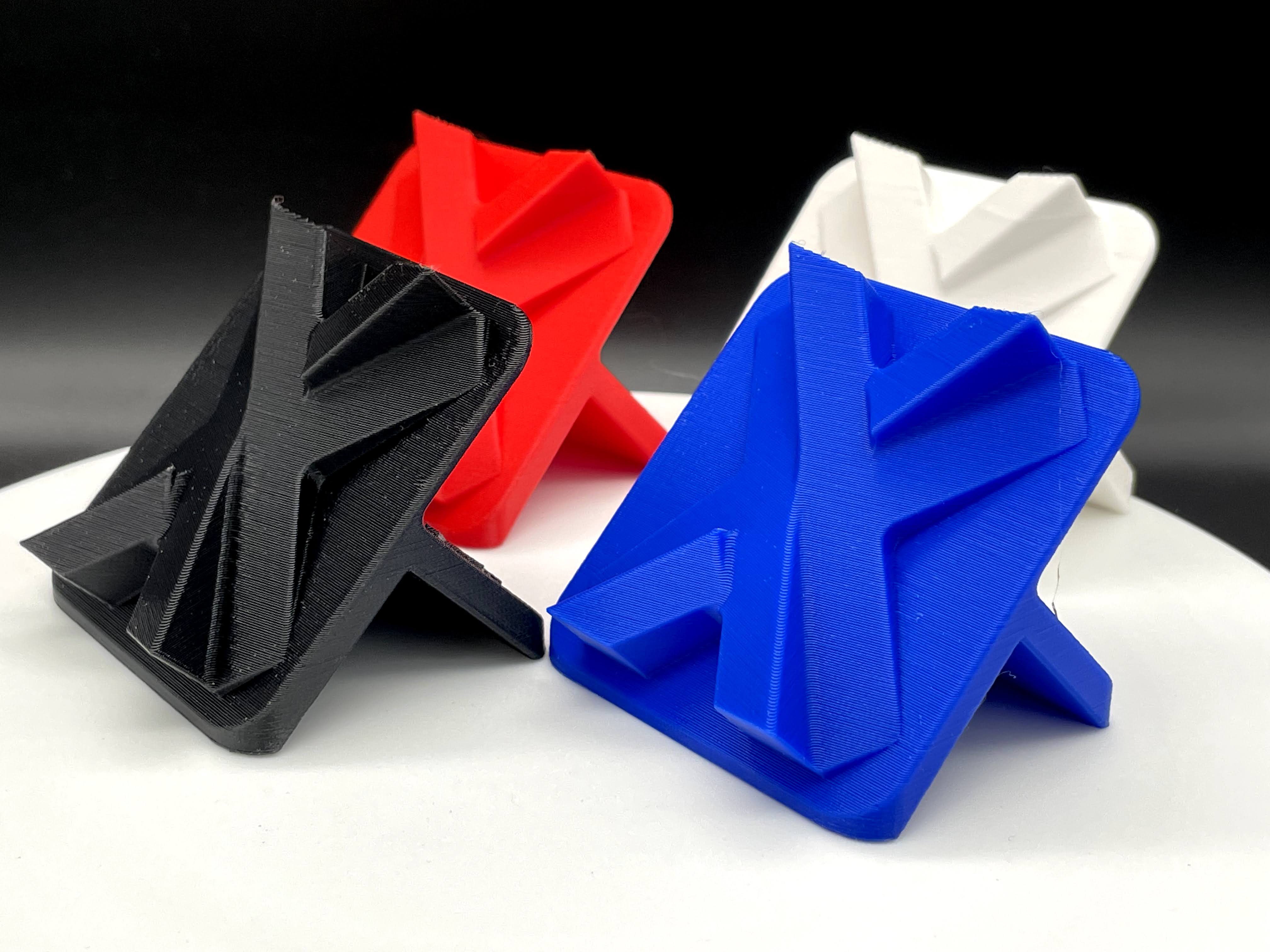
We've expanded our available materials to include Prototyping PLA, a low-cost, rigid thermoplastic produced via Fused Filament Fabrication (FFF) using an array of desktop 3D printers. PLA comes in four colors: black, red, white, and blue. PLA is great for developing concept models or low-wear indoor products.
Because of lower overhead and material costs, PLA is typically less than half the price of our other FDM options. In exchange, there are trades offs with a lower heat-deflection (130°F compared to 186-420°F), lower print volume (~9" max dimension compared to 36"), and fewer plastic options. Keeping that in mind, PLA prints have clean finishes, vibrant colors, and quick lead times.
FDM Applications

Concept Models
The speed and versatility of FDM lets engineers create physical snapshots of their designs.
Rapid Prototyping
An FDM machine can be used to create durable prototypes that withstand thermal, chemical, and mechanical stress.

Manufacturing Tools
High-performance materials make FDM ideal for producing jigs, fixtures, and production tooling.
FDM General Tolerances
| Tolerance Note | Description |
|---|---|
Tolerance Note General Tolerance | Description single build layer thickness for the first inch and .002 for every inch thereafter. |
Tolerance Note Build Size | Description Up to 24" x 36" x 36" |
Tolerance Note Layer Height, less than 16" | Description 0.010" Layers (0.008" for PLA) |
Tolerance Note Layer Height, greater than 16" (up to 36") | Description 0.013" Layers |
Tolerance Note Minimum Wall Thickness | Description 0.047"(less than 16"), 0.060" (greater than 16") |
FDM 3D printed parts can be built up to 24" x 36" x 36". Larger parts are produced on industrial FDM platforms, while prototyping PLA is built on desktop FFF machines with a build volume of 9.8" x 8.3" x 8.3". General tolerances apply before secondary finishing or post-processing unless otherwise specified. To learn more tips about FDM 3D printing, check out our Fused Deposition Modeling (FDM) Design Guide.
An Overview of the FDM Process
How Fused Deposition Modeling Works
With FDM technology, a spool of the chosen feedstock is introduced to a typical fused deposition modeling system via an extruder, which regulates the feed movement of the polymer to the heater where it melts. This molten polymer is extruded through a nozzle and deposited onto the print bed, also known as the build platform. The extruder, heater, and nozzle are all contained in a printhead which is attached to a gantry above the flat build platform. This is designed to offer relatively high freedom of motion in the X and Y axes as the material is deposited.
The fused deposition modeling system uses innovative printer software to separate a 3D computer-aided design (CAD) file into individual slices, or cross-sections. Each slice in the file is converted into machine code, which essentially uses the Cartesian coordinate system to determine the path the printer head must follow across the X and Y axes to deposit the first layer of material onto the build platform. Once the bottom layer is complete, the build platform descends by a small amount – relative to the deposited layer thickness – and the printhead repeats the process to deposit the second layer. This procedure is repeated in sequential layers until the part is finished.
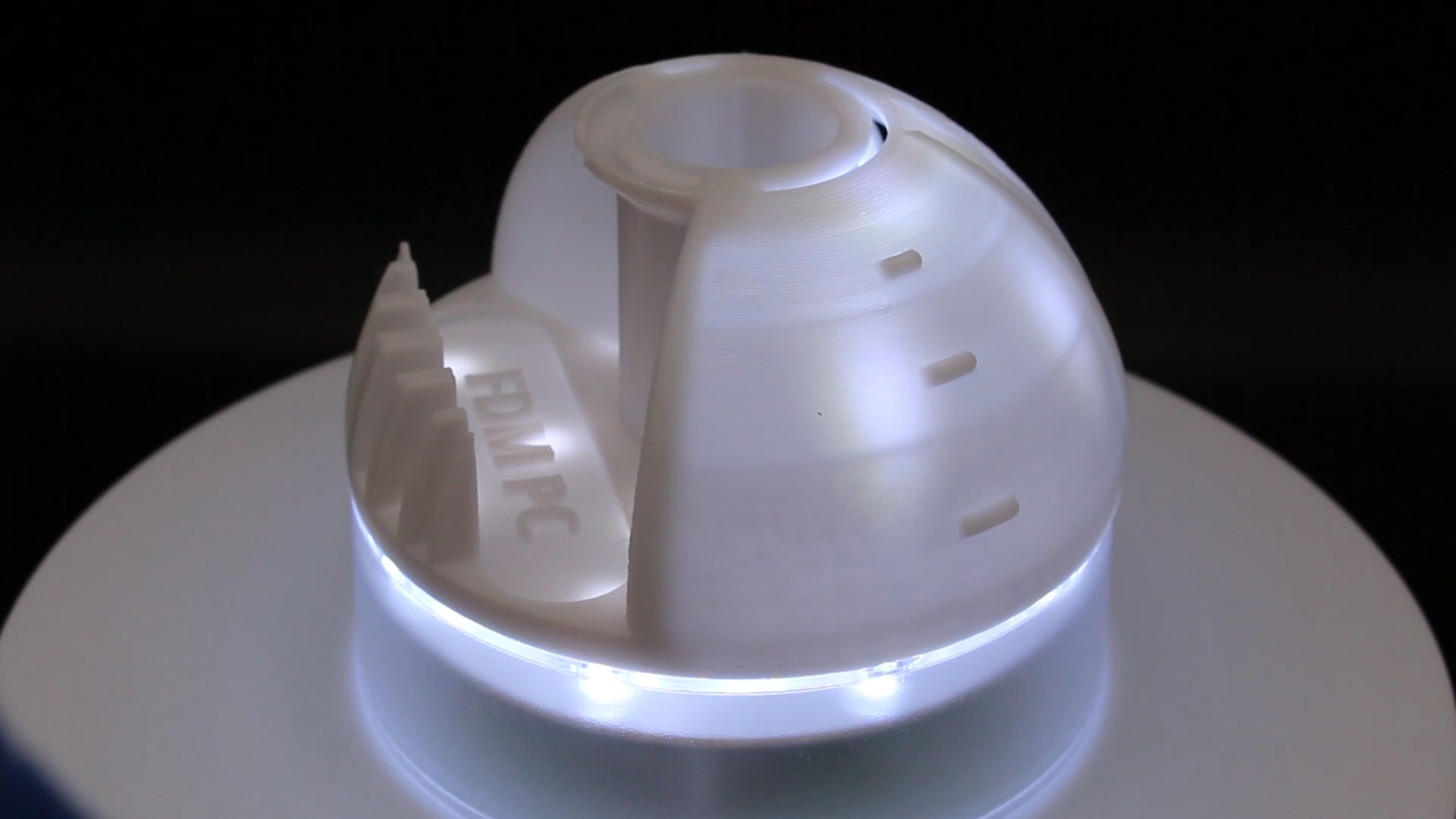
Most FDM systems have a two-nozzle system that can selectively extrude sacrificial support structures as they part prints. Depending on the feedstock, this support may be soluble in a sodium hydroxide (NaOH) bath, leaving only the printed part after processing. The support structure can also be removed manually without damaging the printed part.
The benefits of this technique are manifold, particularly when it comes to the development of concept models and rapid prototypes for research and design (R&D) processes.
Why Use FDM For Your Parts?
Fused deposition modeling (FDM) is among the most easily accessible and recognizable additive manufacturing technologies worldwide. Available to both 3D printing hobbyists and large-volume manufacturers alike, it is known for its speed and precision in generating three-dimensional polymeric structures using a choice of feedstock materials. The range of filaments available for fused deposition modeling includes:
OLA6100 ABS
OLA6200 ASA
OLA6000 PLA
OLA 6310PETG
OLA 6320PET-CF
OLA 6610PA6-CF
OLA 6810PPS-CF
OLA 6910TPU-95A-HF
OLA NylonCF
OLA PETG-CF
OLA 6500PEEK
Benefits Of Fused Deposition Modeling
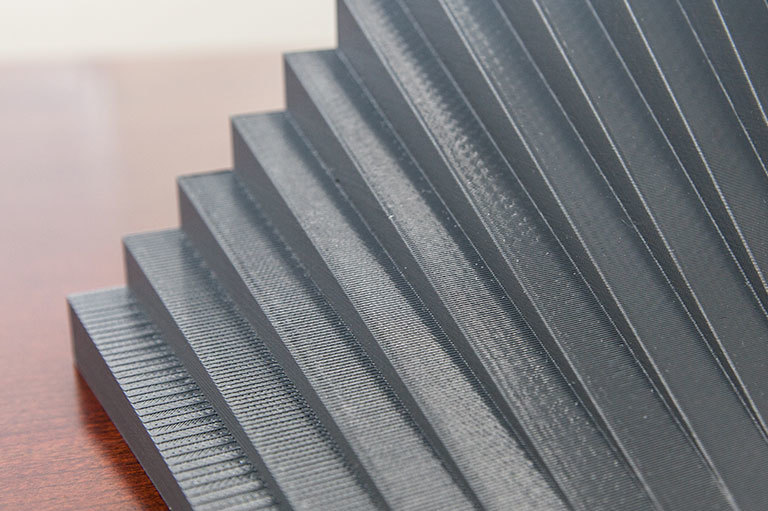
FDM printing is a cost-effective additive manufacturing process, especially for rapid prototyping or low-volume production. Since FDM prints require little post-processing and use more readily available materials, lead times from quote to print and delivery are fast.
Why Choose OLA for FDM 3D Printing?

Endless Options
Choose from millions of possible combinations of materials, finishes, tolerances, markings, and certifications for your order.

Easy to Use
Get your parts delivered right to your door without the hassle of sourcing, project management, logistics, or shipping.

Vetted Network
We are ISO 9001:2015, ISO 13485, and AS9100D certified. Only the top shops that apply to become Suppliers make it through our qualification process.